
India in the crucible
As the world points fingers at India for climate failure, a harsher truth emerges: there is no historical blueprint for escaping poverty without fossil fuels.
GLOBAL CARBON EMISSIONSFOSSIL FUELSCLIMATE CHANGEDEVELOPING COUNTRIESINDIAENERGY ACCESSPOVERTYGLOBAL INEQUALITYCLIMATE ACTIVISMCLIMATE JUSTICE
Neil Tangri
2/18/20262 min read
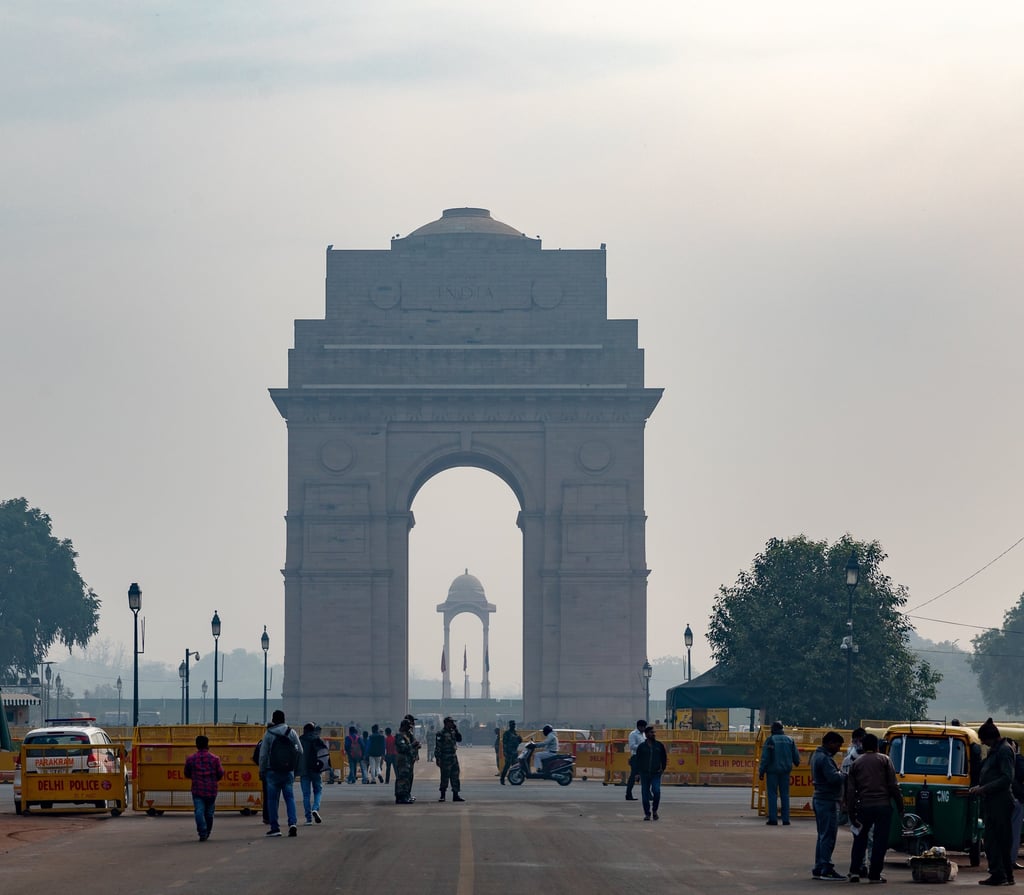
This post was originally written on Dec 2nd, 2015
If the climate change summit in Paris fails, it will be India’s fault. At least, that is the line being pushed by the U.S. In a speech delivered at Stanford University in October, Susan Rice, the U.S. National Security Adviser, pointedly called out India — and only India — as playing an obstructive role in the negotiations. Now the New York Times has picked up the theme. Their charge? The world’s third-largest polluter cannot resist limits on its emissions.
India’s response is poignant. Its poverty is comparable to, or worse than, in sub-Saharan Africa. 40% of the population has little or no access to electricity; 60% of the population doesn’t have indoor plumbing.Government employment schemes pay just $2.5 to $4 a day, yet are heavily oversubscribed. In these straitened conditions, India must prioritize development over emissions reductions; development means energy and energy means, in large part, fossil fuels. Besides, it is sheer hypocrisy for the U.S., with a population one quarter the size of India’s but nine times the historical emissions, to ask India to cut back when it has failed to do so itself.
Indian activists point out that their government’s arguments are rather weakened by hiding behind the poor: the expansion of coal-mining in India is displacing indigenous people from their ancestral lands, throwing them deeper into penury; the cities are choked with exhaust fumes; and the electricity goes to air-conditioned malls accessible only to the rich. But even if India did a far better job of distributing its wealth, it wouldn’t go very far: with a per capita income of $1570 per year, India is by any standard a very poor country.
However, it is simply untenable for India to continue to emit as it has in the past few years. At current rates, the world will burn through its 2C carbon budget in 24 years. India’s emissions are already the third-largest and rising at more than 4% per year. Even if the other big emitters went on crash carbon diets, India would still need to limit its emissions if the planet has a hope of keeping warming to 2C.
The wealthy countries, and even some middle income countries, can reduce emissions while improving their citizens’ livelihoods (if they choose to). The Least Developed Countries’ emissions are so low that they can tackle poverty the old fashioned way — more growth and more emissions — without making a significant dent in the global carbon budget, at least for now. India has neither of these options. It needs a third path, one new in the history of mankind: a way out of poverty without relying on fossil fuels. And it needs it now.
No country faces such a daunting challenge, on such a large scale. If India seems intransigent in the negotiations, it is because it has been backed into a corner. Time to get creative.
Photo credit: “Delhi, India” by Ninara, CC BY 2.0
© 2025. All rights reserved.
Website & Logo design by Afroz Algiers
Photo Credit for background image: Freepik